
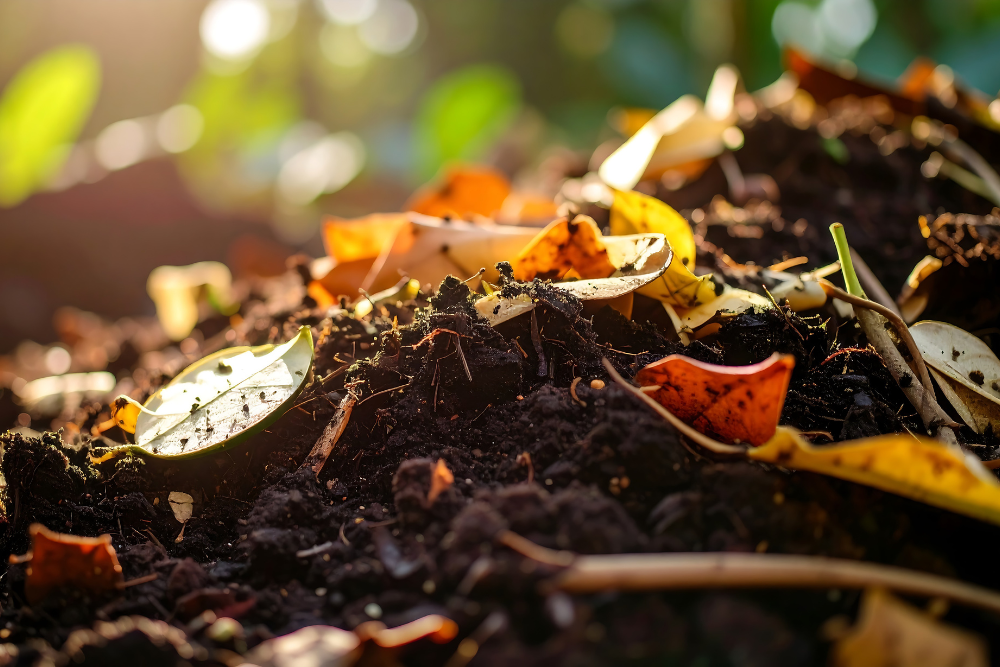
Fresh cow manure contains high levels of ammonia and harmful pathogens, including E. coli, which can damage plants and contaminate soil and water. Before using it as fertilizer, the manure should be fully composted or decomposed to make it safe, nutrient-rich, and environmentally friendly.
⚠️ Safety Precautions
- Use manure only from healthy cattle and avoid manure contaminated with chemicals or garbage.
- Store fresh manure away from rivers, ponds, lakes, and drinking water sources.
- Always allow complete decomposition before applying manure to crops.
🌿 Methods for Turning Cow Manure into Compost
Mix fresh cow manure with crop residues, dry leaves, grass clippings, sawdust, hay, or food waste. Turn the compost pile regularly to improve aeration and maintain even decomposition. The pile should reach at least 55°C (130°F) for several days to destroy harmful pathogens and weed seeds.
Place cow manure inside a sealed biogas digester where it decomposes without oxygen. This process produces biogas for cooking or heating and nutrient-rich digestate that can be used as an organic fertilizer with minimal odor and environmental impact.
Use earthworms such as Red Wigglers (Eisenia foetida) to convert partially decomposed cow manure into high-quality vermicompost. Depending on the quantity and environmental conditions, the process usually takes several weeks to a few months.
Mix cow dung with water and allow it to ferment in a covered container for about one week to produce a nutrient-rich slurry. Traditional preparations such as Panchgavya and Jeevamruta are also widely used to improve soil fertility and increase beneficial microbial activity.
✅ Conclusion
Proper composting transforms fresh cow manure into a safe, nutrient-rich organic fertilizer. Whether you choose hot composting, anaerobic digestion, vermicomposting, or liquid fermentation, complete decomposition eliminates harmful pathogens and excess ammonia while improving soil fertility, plant growth, and environmental sustainability.