
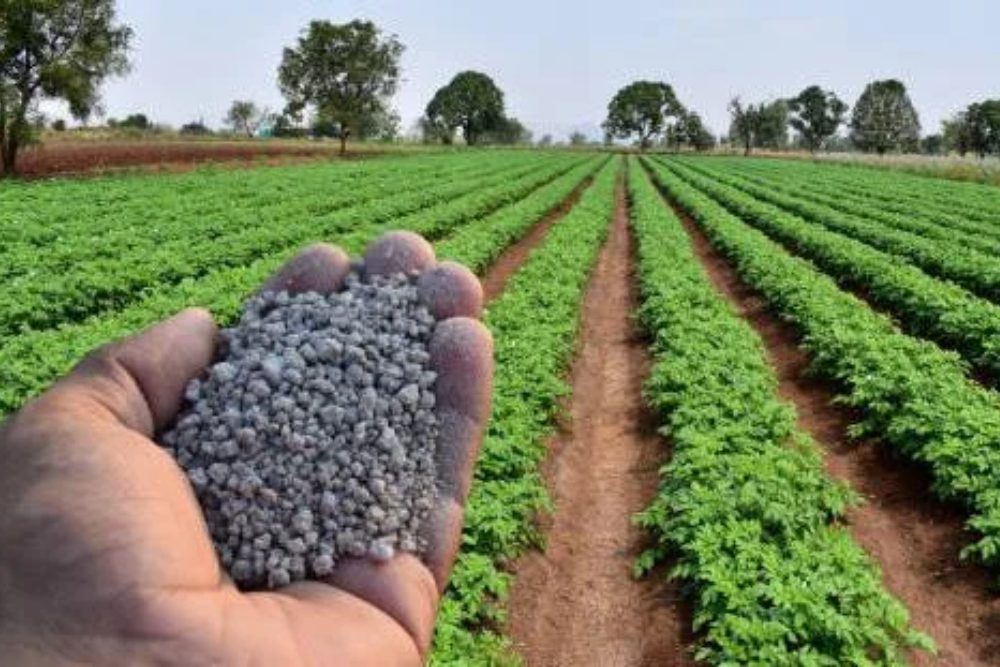
Phosphate Rich Organic Manure (PROM) is prepared by co-composting finely ground rock phosphate with organic compost. During the composting process, beneficial microorganisms gradually convert the phosphorus into a plant-available form, creating a nutrient-rich organic fertilizer.
🛠️ Step-by-Step Process
-
Select Quality Raw Materials
Choose high-quality rock phosphate with adequate phosphorus content and low heavy metal levels. Use well-decomposed organic materials such as compost, agricultural waste, crop residues, or press mud. -
Grind the Rock Phosphate
Crush the rock phosphate into a fine powder. Finer particles increase the surface area, allowing phosphorus to dissolve more efficiently during composting. -
Mix with Compost
Blend the powdered rock phosphate thoroughly with the compost until the mixture is uniform and free of large lumps. -
Add Beneficial Microorganisms (Optional)
To improve phosphorus availability, introduce phosphate-solubilizing bacteria such as Bacillus or Pseudomonas, or use a suitable microbial inoculant. -
Manage the Composting Process
Keep the compost pile well-aerated and maintain adequate moisture and temperature. Turn the pile regularly to promote even decomposition and healthy microbial activity until the compost matures. -
Dry, Test & Store
After composting is complete, dry the material, break any remaining lumps, and test for important quality parameters such as phosphorus, organic carbon, nitrogen, pH, moisture, and heavy metals. Store the finished PROM in sealed bags in a cool, dry place.
💡 Best Practices
- Use only high-quality raw materials from reliable sources.
- Maintain proper moisture and aeration throughout composting.
- Turn the compost pile regularly for uniform decomposition.
- Store finished PROM away from direct sunlight and moisture.
- Use certified microbial cultures for better phosphorus release.
✅ Conclusion
Producing Phosphate Rich Organic Manure (PROM) is an effective way to transform rock phosphate and organic waste into a sustainable fertilizer. Proper composting techniques, quality raw materials, and good storage practices ensure a nutrient-rich product that improves soil fertility, supports healthy plant growth, and promotes environmentally friendly agriculture.