
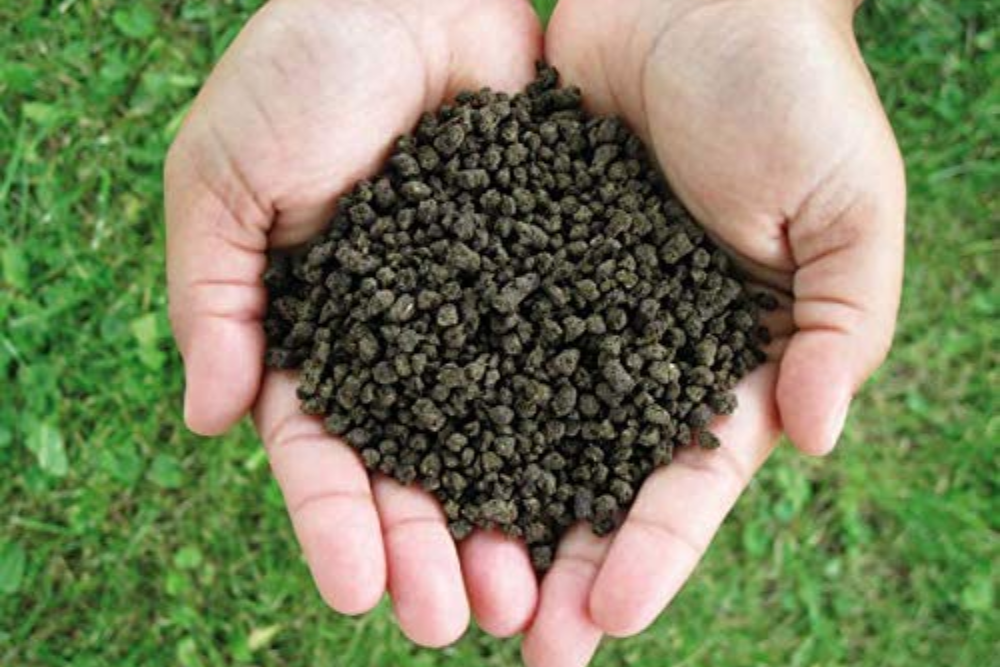
Soil remembers everything we feed it. That's why more farmers, agricultural consultants, and gardening enthusiasts are talking about PROM — Phosphate Rich Organic Manure, an input that combines phosphorus nutrition with organic matter to support both crop growth and long-term soil health, over traditional chemical alternatives.
PROM is an organic fertilizer made from organic residues, rock phosphate, and organic matter. It's designed to supply phosphorus to plants while contributing organic material that improves the overall condition of the soil, supporting root growth and nutrient uptake at the same time.
Indian FCO-linked specifications typically require a minimum of 8.0% total phosphates (P₂O₅), 8.0% total organic carbon, 0.40% nitrogen, moisture under 25%, particle size where 90% passes a 4 mm sieve, a C:N ratio below 20:1, and a pH between 6.5 and 8.0. These benchmarks show PROM is a recognised manure category, not just a loose organic input.
Phosphorus drives root establishment, flowering, energy transfer, and seed formation. Crops that don't get enough phosphorus grow slower and develop weaker root systems, which directly lowers yield potential. PROM delivers this nutrient through an organic-manure-based approach rather than relying only on conventional chemical phosphorus sources.
💡 Key Benefits
Nutrient and phosphate concentration
PROM typically contains 6–12% phosphorus pentoxide (P₂O₅), sitting between traditional compost levels and synthetic fertilizers. The phosphate exists in both readily available and slow-release forms, giving plants a sustained feed through the season without the risk of nutrient burn. Alongside this, PROM carries nitrogen (3–6%) and potassium (2–4%) from organic sources such as decomposed plant matter and animal waste, releasing gradually as soil microorganisms break the material down.
Organic matter and soil enrichment
Organic matter content in quality PROM ranges from 35–60%. This improves water retention in sandy soils while enhancing drainage in clay-heavy ground. Carbon-rich materials — composted crop residues, aged manure, decomposed plant matter — form stable humus that binds soil particles together, feeds earthworms and beneficial bacteria, and compounds soil improvements over multiple seasons.
Micronutrient profile
| Micronutrient | Typical Range | Plant Function |
|---|---|---|
| Iron | 200–800 ppm | Chlorophyll synthesis |
| Zinc | 50–200 ppm | Protein synthesis |
| Manganese | 100–400 ppm | Photosynthesis |
| Copper | 10–50 ppm | Enzyme activation |
| Boron | 20–80 ppm | Cell wall formation |
Sulfur (0.5–2%) supports protein synthesis and oil production, while calcium and magnesium — often present through limestone additions during composting — support cell wall strength and photosynthesis.
Natural pH balancing
Most PROM fertilizers maintain a pH of 6.5–7.5, buffering soil acidity without harsh chemical adjustments. Humic and fulvic acids formed during composting can both release and accept hydrogen ions, keeping soil chemistry stable for months after application.
Enhanced root development
The slow-release organic phosphorus in PROM helps plants develop deeper, more extensive root networks that access water and nutrients from greater depths, improving resilience during dry spells. Seedlings benefit from consistent nutrient flow, and farmers often notice faster germination and more uniform crop emergence compared to synthetic fertilizers.
Improved soil structure and water retention
Organic matter binds soil particles into stable aggregates that resist erosion and compaction, creating pore spaces for air and water movement. Some studies show 20–30% improvements in water-holding capacity, reducing irrigation needs. Earthworm and soil-organism activity further improves drainage and moisture balance.
Increased yields and quality
Root vegetables like carrots, potatoes, and onions often develop better shape, size, and storage quality. Fruit quality improves too — tomatoes develop richer flavour and firmer texture, while fruit trees produce larger, sweeter harvests. Protein content in grains and legumes also tends to rise, adding to nutritional and market value.
Long-term soil fertility
Each PROM application adds to the soil's organic matter bank, compounding fertility year after year. Soil pH stabilises naturally, reducing lime requirements, while beneficial microbial populations flourish and cycle nutrients efficiently. Because phosphorus doesn't leach away like water-soluble chemical forms, it stays available in the root zone for longer.
Cereal crops
Wheat, rice, corn, and barley all benefit from sustained phosphorus release through critical growth periods, supporting tillering, kernel formation, and drought resistance.
Vegetable and market garden farming
| Vegetable Type | Application Rate | Timing |
|---|---|---|
| Leafy greens | 200–250 kg/ha | Pre-planting + monthly |
| Fruiting crops | 350–400 kg/ha | Soil prep + flowering |
| Root vegetables | 250–300 kg/ha | Pre-planting only |
Root vegetables benefit from better soil texture and reduced compaction, while brassicas like cabbage and broccoli show improved head formation. PROM's organic nature also reduces salt buildup concerns common in intensive greenhouse and raised-bed systems.
Orchard and fruit tree management
Apple, citrus, stone fruit, and nut trees develop stronger root systems in PROM-amended soils. Citrus groves often show improved fruit quality and reduced alternate bearing, while stone fruit orchards benefit from better calcium availability, reducing split-pit disorders. PROM also supports mycorrhizal fungi development, extending root systems and improving drought tolerance.
Cost-effectiveness
A single PROM application can last 2–3 seasons thanks to its slow-release nature. Many farmers report cutting fertilizer costs by 30–40% within two years of switching, alongside lower irrigation and soil-amendment costs as soil structure improves.
Environmental sustainability
| Environmental Factor | Chemical Fertilizers | PROM Fertilizers |
|---|---|---|
| Water pollution risk | High | Minimal |
| Soil pH impact | Acidification | Buffered / stable |
| Beneficial insects | Often harmed | Protected / encouraged |
| Carbon footprint | High (manufacturing) | Low (natural process) |
Chemical fertilizer run-off often creates algae blooms and dead zones in waterways. PROM's organic matter binds nutrients to soil particles, holding them where plants need them, while also supporting birds, beneficial insects, and earthworms rather than disrupting these food chains.
Reduced chemical dependency
Where chemical programs often need separate base fertilizers, micronutrients, soil conditioners, and pH adjusters, PROM provides this as one complete package — fewer purchases, less frequent soil testing, and lower lime and pesticide requirements as plant health improves.
Enhanced soil biology
Healthy soil holds billions of bacteria, fungi, and other microorganisms per gram — organisms that break down organic matter, fix nitrogen, and protect roots from disease. PROM feeds this ecosystem rather than suppressing it, helping microbes multiply, form natural protective compounds, and build symbiotic relationships with plant roots that extend their reach for nutrients and water.
✅ Final Thoughts
PROM supplies phosphorus, adds organic matter, supports microbial life, and delivers residual benefits into the next crop cycle. For growers looking to strengthen root development, protect soil quality, and adopt a more balanced nutrient approach, PROM is more than just another fertilizer category — it's a smarter way to think about crop nutrition.